1100 E David Pl Tea, SD 57064
For Sale: $875,000
Property Highlights
Phasellus tincidunt risus a ante ullamcorper elementum. In non lacus non ligula hendrerit sodales. Donec pharetra, tellus eu porta sollicitudin, erat est cursus eros.
A new-construction owner-user opportunity in Tea.
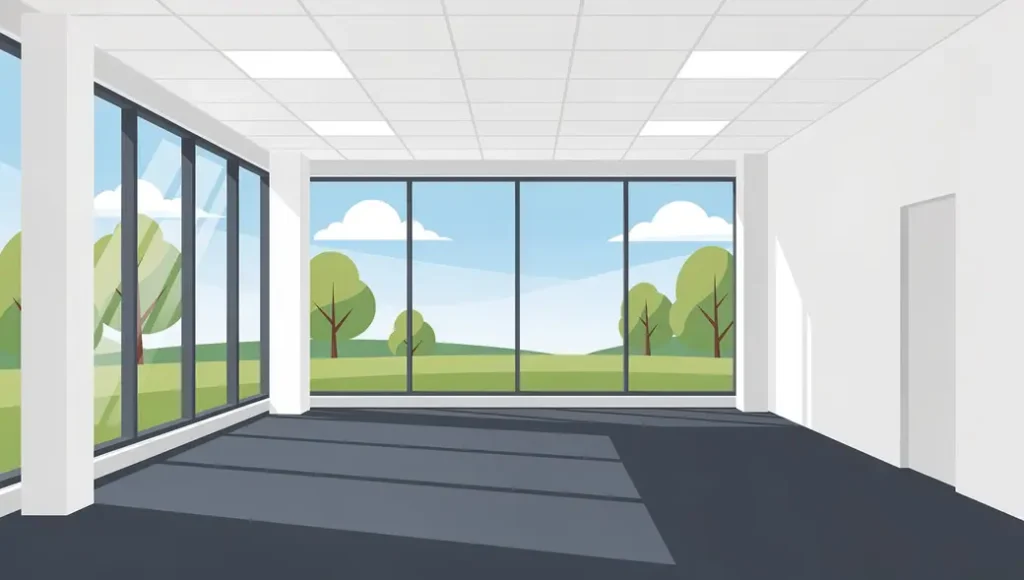
New construction stand-alone shop/warehouse in Tea, SD, sitting on a 0.6 acre lot. Estimated completion date: May, 2026. Buildout can be specified by buyer and incorporated into current construction. Built with 18' sidewalls and 16' overhead door. Convenient access to I-29 via Exit 73. Within Tea city limits and connected to city water and sewer. One of the few industrial properties in the Sioux Falls area under 10,000 sq. ft. included in Asking Price: Insulated and heated by hanging forced air heater. Concrete floor with floor drain and oil/water separator. Office and restroom built out, with buyer to determine location. Paved parking lot with 19 spaces. Direct access onto Ginger Ave and David Place. Need a different sized building? Fully customized build to suit building can be constructed on remaining lots in development. Agent is related to Sellers.
Achieve Your Goals with a Trusted Partner.
With deep expertise and a client-first approach, our advisors work alongside you to turn vision into reality. Whether you're expanding, investing, or refining your strategy, we provide the insight and support to help you succeed.
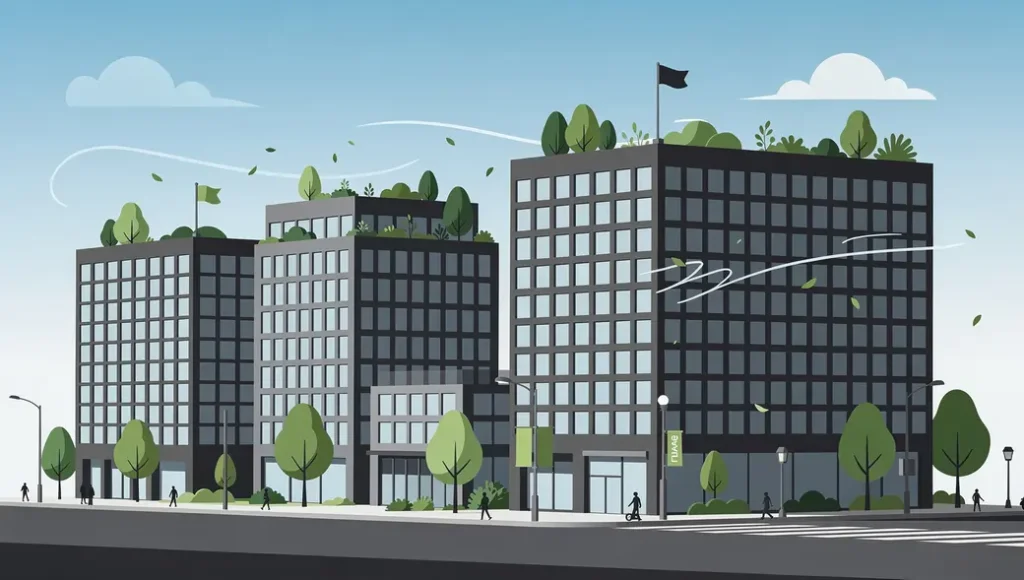
The national office market has been the most talked-about (and most worried-about) sector in commercial real estate for four years now. Remote work, hybrid schedules, and corporate downsizing have hammered demand in cities across the country. But the national story is starting to stabilize. And in Sioux Falls, the office picture is more nuanced than any single vacancy number can capture.
The National Recovery (Sort Of)
NAR’s March 2026 report shows national office net absorption at negative 2.5 million square feet. That is still negative, meaning more tenants are leaving office space than moving in. But a year ago, the number was negative 14.9 million square feet. That is a massive improvement, even if we are not in positive territory yet.
National vacancy stands at 14.0%. Rent growth is a modest 1.1%. Cap rates have climbed to 9.0%, reflecting the risk premium that investors demand for office assets right now.
The class breakdown is revealing. Class A space led leasing, absorbing 19.4 million square feet. Companies are upgrading. They want nicer offices to lure people back. But Class A also carries the highest vacancy at 20.1%, because so much of it was built speculatively. Class B lost 16.8 million square feet of tenants, with vacancy at 12.5%. Class C lost 4.5 million square feet, but actually retained the lowest vacancy at 5.5% and the strongest rent growth at 1.3%. Smaller, cheaper spaces are holding up because small businesses still need a place to work.
The extremes nationally tell their own story. Davenport, Iowa, and Myrtle Beach, South Carolina, have the lowest vacancy at 1.9%. San Francisco has the highest at 21.7%. Geography and industry mix matter enormously.
Sioux Falls: One City, Two Realities
Sioux Falls’ overall office vacancy is 12.1%. That is below the national 17.6%, and on the surface, it looks manageable. But the average obscures what is really happening.
Downtown Sioux Falls has a vacancy rate of 4.1%. That is tight. About 110,000 square feet is available in the entire downtown core. If you are a business looking for downtown office space, your options are limited. However, if you keep reading, you’ll see this isn’t even the most competitive section of our market.
Suburban Sioux Falls tells a completely different story. Vacancy there is 15.2%. Still below the national average, but not by much. The gap between 4.1% downtown and 15.2% suburban is striking.
The Small Space Crunch
Here is another layer. Spaces under 10,000 square feet have just 2.7% vacancy. That is incredibly tight. If you are a small business, a startup, or a professional services firm looking for a modest office, there is almost nothing available.
Of the roughly 1.2 million square feet of total available office space in Sioux Falls, 78% of it sits in blocks of 10,000 square feet or greater, concentrated in just 19 buildings. Remove those large block vacancies from the equation and the overall vacancy rate drops to roughly 3%.
So the “office vacancy problem” in Sioux Falls is really a “large suburban building problem.”
What Happened to the Call Centers?
Many of those large suburban vacancies are former call centers. These buildings were purpose-built for a business model that has shifted. Call center work moved remote or offshore, and the buildings were left behind.
The good news is that creative repurposing is already underway. Former call centers are being converted to churches, daycare facilities, and manufacturing space. These are not glamorous transformations, but they are practical ones. The buildings are getting second lives that serve the community.
Downtown is seeing its own notable conversion. The U.S. Bank building at 141 North Main is being converted into an AC by Marriott hotel. That is a strong signal about downtown’s trajectory. When a prominent office building becomes a hotel, it tells you two things: office demand alone is not enough to fill the space, and downtown’s value as a destination (not just a workplace) is rising.
From Confusion to Confidence
Bender Commercial describes the Sioux Falls office market as “moving from confusion to confidence.” That feels right. The pandemic scrambled everyone’s assumptions about office space. For a few years, nobody knew what tenants wanted, what buildings were worth, or how much space anyone actually needed.
That fog is lifting. Investment sales volume for office properties was up 24% year over year. Capital is flowing back in. Buyers are seeing value, particularly in well-located properties with strong tenants.
The headline vacancy number in Sioux Falls does not tell the full story. Downtown is tight. Small spaces are scarce. The real challenge, and the real opportunity, is figuring out what to do with a handful of large suburban buildings that no longer fit the model they were built for. The market is solving that problem one building at a time.
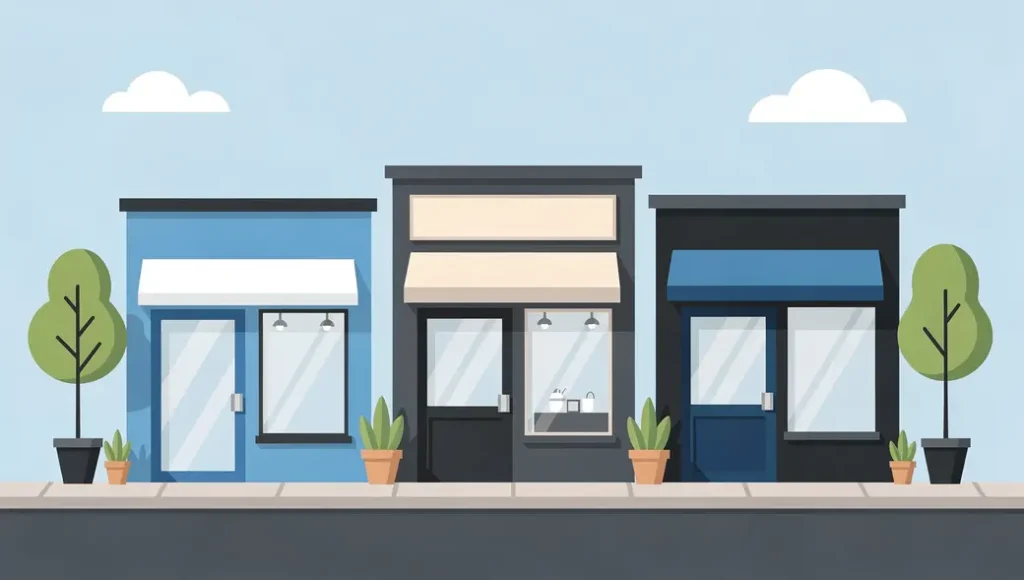
If you have been reading national headlines about retail real estate, you might expect a grim picture. Store closures. Mall demolitions. The “retail apocalypse.” But the actual data tells a different story, especially in the Upper Midwest. And Sioux Falls, in particular, is one of the strongest retail markets in the country right now.
National Retail: Tighter Than You Think
NAR’s March 2026 report shows national retail net absorption at negative 0.5 million square feet. That is slightly negative, meaning a small net loss of occupied space. But national vacancy is just 4.4%. That is low. Very low. And rent growth hit 2.0%, the strongest of any major commercial property type. Cap rates are at 7.3%.
The negative absorption is concentrated in specific formats. Neighborhood centers recorded the largest pullback at negative 6.4 million square feet. Malls posted losses of 2.4 million square feet. These are the categories most exposed to e-commerce and changing consumer habits.
General retail, by contrast, had the lowest vacancy nationally at just 2.7%. That format is doing well because it tends to be smaller, more flexible, and better suited to service-oriented tenants (restaurants, salons, medical clinics) that cannot be replaced by online shopping.
Some metro areas are particularly strong. Dallas-Fort Worth and Phoenix each led absorption with gains exceeding 2 million square feet. On the rent growth side, Minneapolis led the entire nation at 6.7%, with Charlotte close behind at 6.3%. Over the past 12 months, 27.9 million square feet of new retail was delivered nationally.
The Upper Midwest Bright Spot
Minneapolis leading the nation in retail rent growth at 6.7% is worth pausing on. Minneapolis is just a few hours up Interstate 29 and Interstate 90 from Sioux Falls. When the largest metro in your region is the top-performing retail market in America, that signals something about the broader region’s economic health, consumer confidence, and population stability.
The Upper Midwest does not get the attention that the Sun Belt does. It does not have the population explosions of Texas or Florida. But it has steady growth, low unemployment, a strong labor force, and consumers who actually go to stores. That combination is quietly powerful for retail real estate.
Sioux Falls: The “Goldilocks” Market
Bender Commercial has called the Sioux Falls retail market a “Goldilocks” market. Balanced, stable, and growth-supported. The data backs that up.
Local retail vacancy is 8%. Five years ago, it was 13.3%. That is a significant tightening trend. And it happened while approximately 1 million square feet of new retail was added over that same period. The market absorbed new supply and still got tighter. That only happens when demand is genuinely strong.
When vacancies do occur, spaces are getting backfilled quickly. National tenants continue to enter the market. Retail land sales increased in 2025. And retail investment sales volume jumped 76% year over year, the strongest gain of any commercial sector in Sioux Falls.
Population Growth Is the Engine
Retail fundamentally follows people. More residents means more spending, more demand for services, and more storefronts needed. Sioux Falls’ population grew 2.3% to 224,676. That steady growth is what sustains retail demand year after year. It is not flashy. It is reliable. And retailers value reliability.
The metro communities surrounding Sioux Falls are contributing too. Tea, Harrisburg, and Brandon are all growing and providing new retail development opportunities. Rooftops are going up in these communities, and retail follows rooftops. This expanding metro footprint means more sites for retailers who might not find the right space within Sioux Falls city limits.
What Makes This Market Different
The national retail narrative centers on disruption. E-commerce eating into physical stores. Malls losing anchor tenants. Big-box closures rippling through strip centers. That is real. It is happening in many markets.
But Sioux Falls is not “many markets.” The local retail story is about consistent population growth creating consistent demand. It is about a trade area that extends well beyond the city limits, drawing shoppers from across eastern South Dakota and into neighboring states. It is about a market that is large enough to attract national brands but not so saturated that every category is overbuilt.
The 76% jump in retail investment sales volume says a lot. Investors see what the data shows: this is a market where retail works. Vacancy is falling. Rents are healthy. New construction is being absorbed. And the Upper Midwest, anchored by Minneapolis’ leading rent growth, is a region where retail is performing at a national-best level.
Sioux Falls is not immune to the forces reshaping retail across the country. But it is positioned as well as any mid-size market in America to weather those forces and keep filling storefronts. That quiet strength is worth paying attention to.
The national industrial market is cooling off. That is not a crisis. It is a correction. After the pandemic supercharged demand for warehouse and logistics space, the market overbuilt. Now it is working through the hangover. But Sioux Falls, even while cooling alongside the rest of the country, is doing so from a position most markets would envy.
The National Picture: Strong, but Settling
According to NAR’s March 2026 Commercial Real Estate Insights Report, national industrial net absorption totaled 114.2 million square feet over the past 12 months. That sounds enormous. It is. But it is also down 27% year over year. The pace is slowing.
National vacancy sits at 7.6%. Rent growth has cooled to 1.3%. Cap rates are at 7.4%. Completions continue to outpace leasing, which means new buildings are coming online faster than tenants can fill them.
Where is the demand? Logistics assets drove the bulk of it at 87.8 million square feet. Specialized facilities (think cold storage, pharmaceutical, advanced manufacturing) posted 25.2 million square feet of gains. Flex space, on the other hand, saw 7.8 million square feet of net move-outs. That category is struggling everywhere.
Dallas-Fort Worth led the nation in absorption at 24.5 million square feet. On the vacancy side, the range is wide. Charleston, South Carolina, sits at 14.8%. Anchorage, Alaska, at just 1.1%. Context matters.
Sioux Falls: A “High” Vacancy That Most Cities Would Love
The local industrial vacancy rate hit 4.8%. For Sioux Falls, that is a 20-year high. Headlines might frame that as concerning. But let’s be clear: 4.8% is still well below the national 7.6%. Most metros in the country would trade their numbers for ours in a heartbeat.
Absorption dropped about 20% to 680,000 square feet. That mirrors the national trend. New construction held steady at 1.1 million square feet, which means we are still building. And sales volume hit a record $168 million. People are not running from Sioux Falls industrial. They are investing in it.
The Projects That Tell the Story
Numbers only go so far. The real story is in what is actually getting built.
Amazon landed here. CJ Schwan’s committed $170 million to expansion. Silencer Central is growing. These are not speculative projects. They are commitments from companies that see long-term value in this market.
Then there is the biggest one. Smithfield Foods announced a $1.3 billion pork processing plant. That is the largest private investment in Sioux Falls history. Full stop. A project of that scale does not just add square footage. It reshapes the labor market, the supply chain, and the surrounding infrastructure for years.
On the emerging side, data center demand is starting to show up. The Gemini site in east Sioux Falls has already secured rezoning and annexation. Data centers require enormous power capacity, fiber connectivity, and flat land. Sioux Falls checks those boxes. This could become a meaningful new demand driver in the years ahead.
Where the Land Is Going
One constraint worth watching: industrial land in Sioux Falls proper is getting scarce. Most industrial land sales in the past year have been in Tea and Harrisburg. That is not a problem exactly, but it does mean the metro is spreading. Developers and tenants who want to be close to the core of Sioux Falls need to plan earlier and move faster than they did five years ago.
What to Expect in 2026
The outlook for this year is straightforward. Construction should stabilize. Vacancy should start declining as the market absorbs what has been built. Lease rates should hold steady. And after a record-setting sales year, there is reason to expect renewed momentum on the investment side.
The national market is normalizing. So is Sioux Falls. The difference is where each started from. When your “high” vacancy is still 2.8 percentage points below the national average, and when a $1.3 billion plant and data center interest are on the horizon, normalizing looks a lot like opportunity.

Commercial representation and advisory services for businesses, property owners, and investors in Sioux Falls and the surrounding market.
Terms Of Use Privacy Policy Accessibility Statement Fair Housing Notice
© Better Homes and Gardens Real Estate LLC. Better Homes and Gardens® is a registered trademark of People Inc. licensed to Better Homes and Gardens Real Estate LLC. Better Homes and Gardens Real Estate fully supports the principles of the Fair Housing Act. Equal Opportunity Company. Equal Housing Opportunity. Each franchise is independently owned and operated. Any services or products provided by independently owned and operated franchises are not provided by, affiliated with, or related to Better Homes and Gardens Real Estate LLC, nor any of its affiliated companies.
No guarantee, warranty or representation of any kind is made regarding the completeness or accuracy of descriptions or measurements (including square footage measurements and property condition), such should be independently verified, and Better Homes and Gardens Real Estate Beyond expressly disclaims any liability in connection therewith. No financial or legal advice provided.
